Track the Great Migration month by month in 2025. Where herds are located each month, best viewing spots, and when to see river crossings.
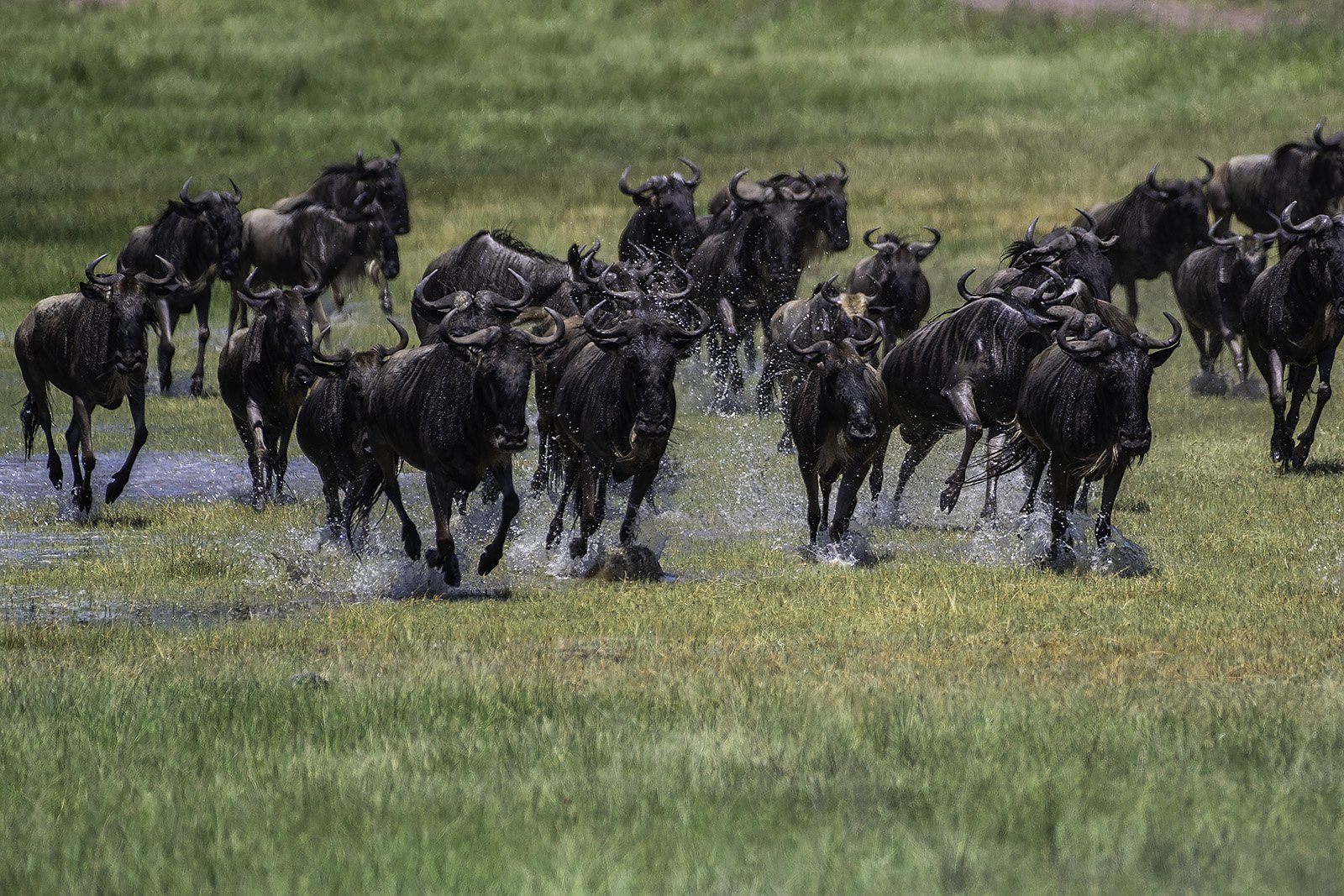
The Great Migration never stops—two million wildebeest, zebra, and gazelle move continuously through the Serengeti-Mara ecosystem in an endless search for fresh grazing and water. Understanding where they'll be each month transforms your planning from guesswork to precision.
Migration Overview: The Annual Cycle
The migration follows a roughly clockwise pattern driven by rainfall and grass growth:
- December-March: Southern Serengeti (calving)
- April-May: Central and Western Serengeti
- June-July: Western Corridor, approaching northern Serengeti
- July-October: Northern Serengeti and Masai Mara (river crossings)
- November: Return journey south through eastern Serengeti
January: Southern Serengeti
Location: Ndutu, Kusini, Southern Plains
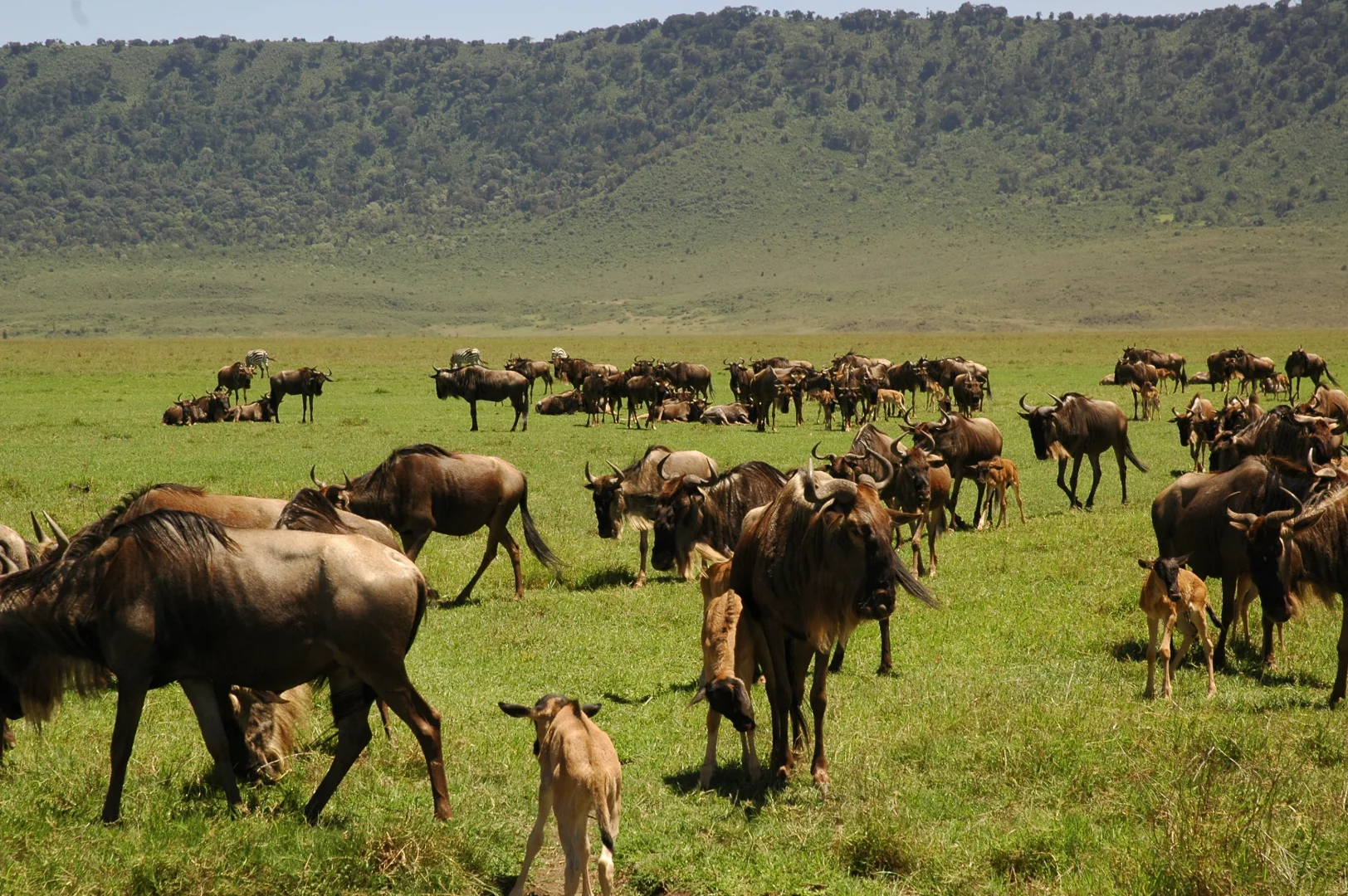
Herds concentrate on the short-grass plains around Ndutu and Lake Masek. January marks the beginning of calving season—thousands of wildebeest births begin occurring daily.
What You'll See
- Massive herds stretching to the horizon
- Early calving—wobbly newborns taking first steps
- Predators gathering: lions, cheetahs, hyenas
- Spectacular open plains photography
Where to Stay
Ndutu Safari Lodge, Lake Masek Tented Camp, mobile camps in the area. Book 4-6 months ahead.
February: Peak Calving
Location: Southern Serengeti Plains
February represents calving season's peak—up to 8,000 wildebeest born daily during the most intense period. The concentration of vulnerable young attracts extraordinary predator activity.
What You'll See
- Dramatic birth scenes throughout the day
- Maximum predator action—lions, cheetahs hunting newborns
- Hyena clans working the edges of herds
- Vultures and jackals cleaning up
Best Viewing
Stay in Ndutu area; game drives focus on the plains rather than woodland. Early morning offers best action as predators hunt.
Calving Season Tip
February calving rivals August river crossings for drama but with far fewer vehicles. For wildlife action without crowds, calving season often exceeds expectations. Book specific lodges—not all Serengeti locations access the calving areas easily.
March: Herds Begin Moving
Location: Central Serengeti, Seronera
As southern grasses deplete, herds begin drifting northwest. March is transitional—you might find herds in southern plains, central woodlands, or moving between areas.
What You'll See
- Late calving continues
- Herds on the move—classic migration imagery
- Mixed wildlife concentrations
- Rains beginning late month
Planning Note
March requires flexibility—herds move unpredictably. Stay at central locations (Seronera area) for best access to wherever animals concentrate.
April-May: Western Movement
Location: Central to Western Corridor
Heavy rains trigger continued northwest movement. Herds spread through central Serengeti and begin entering the Western Corridor. Mating season occurs during this period.
What You'll See
- Herds crossing woodland areas
- Mating behavior—males competing
- Lush, green landscapes
- Excellent birding as migrants arrive
Green Season Considerations
Rainy conditions can challenge game viewing. Grass grows tall, roads may be difficult. However, dramatic landscapes and mating behavior reward patient visitors.
June: Western Corridor Gatherings
Location: Grumeti River Area
Herds mass in the Western Corridor around the Grumeti River. June represents excellent value—migration present, dry season beginning, prices below peak. The first river crossings occur (Grumeti River).
What You'll See
- Large herds in Western Corridor
- Grumeti River crossings (smaller than Mara)
- Crocodile ambushes begin
- Lion prides positioned for hunting
Value Month
June offers migration viewing without August prices or crowds. Stay in Western Corridor lodges for proximity to action.
July: Northern Push Begins
Location: Northern Serengeti, approaching Mara River
Herds push north toward the Mara River. First major Mara River crossings begin—the iconic imagery that defines migration in most travelers' minds.
What You'll See
- First dramatic Mara River crossings
- Crocodile attacks on crossing herds
- Herds building on river banks, "decision-making"
- Maximum predator presence
Booking Essential
Northern Serengeti camps fill 6-12 months ahead for July. Mara River-specific locations command premiums. Book immediately when dates are confirmed.
August: Peak River Crossings
Location: Northern Serengeti and Masai Mara
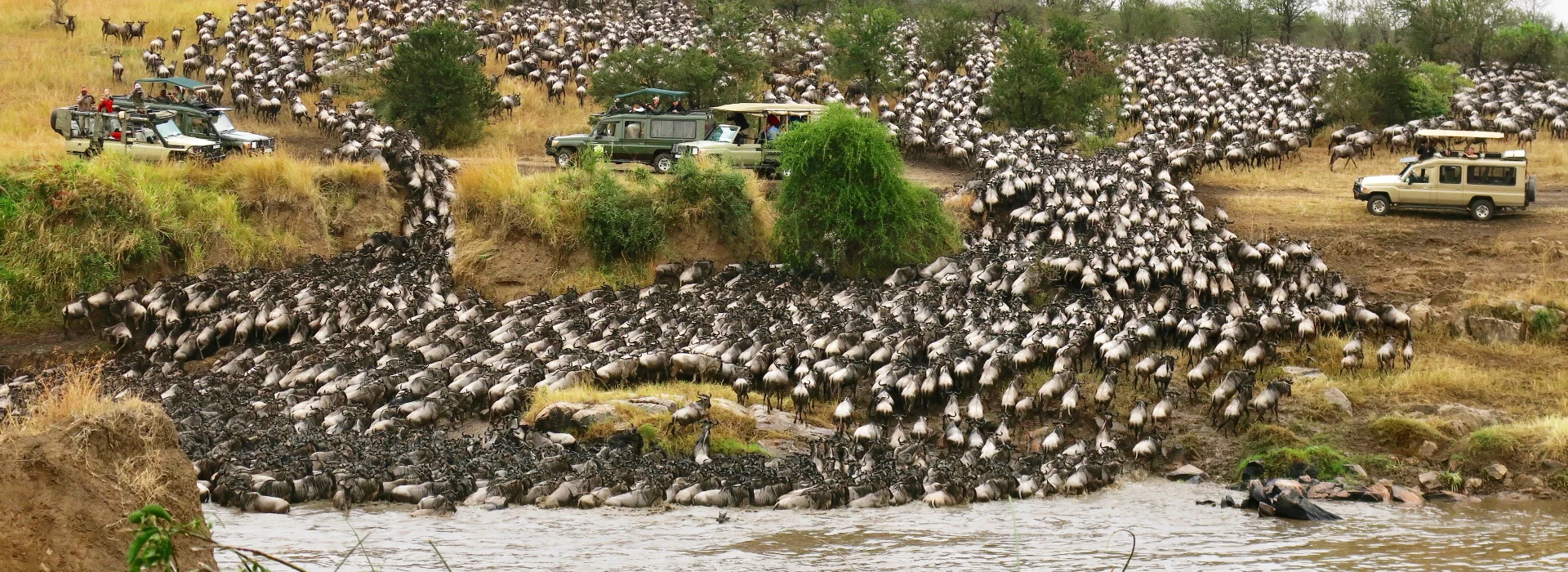
August delivers safari's most famous spectacle—massive herds crossing the crocodile-infested Mara River. Drama peaks as thousands attempt the treacherous crossing daily during peak periods.
What You'll See
- Large-scale river crossings (thousands at once)
- Crocodile attacks and drownings
- Herds crossing multiple times
- Maximum concentration of wildlife and vehicles
Reality Check
August brings both peak wildlife and peak crowds. Crossings attract many vehicles; patience required at popular crossing points. Worth it for the spectacle; manage expectations about exclusivity.
Crossing Strategy
Crossings are unpredictable—herds might wait hours or days before crossing. Stay at camps near multiple crossing points, dedicate full days to waiting, and trust experienced guides who know herd behavior patterns.
September: Crossings Continue
Location: Northern Serengeti and Masai Mara
September continues crossing drama with slightly reduced crowds as European school holidays end. Herds move between Kenya and Tanzania, sometimes crossing back multiple times.
What You'll See
- Continued river crossing action
- Return crossings (north to south)
- Resident wildlife excellent (dry season)
- Slightly fewer vehicles than August
October-November: Return Journey
Location: Central/Eastern Serengeti, Moving South
Following the short rains, herds begin returning south. The journey spreads across eastern Serengeti as animals follow fresh grass growth.
What You'll See
- Herds on the move southward
- Excellent resident wildlife (dry season end)
- Fewer concentrated spectacles, more dispersed herds
- November: greening landscapes, baby antelopes
December: Completing the Circle
Location: Southern Serengeti
Herds return to the southern plains to complete the cycle. By late December, concentration builds in the Ndutu region, preparing for January-February calving.
Why Trust This Guide
Our Migration Expertise
- 20+ years tracking migration patterns
- Direct observation and guide network
- Updated annually with current data
- TATO certified with quality standards
Frequently Asked Questions
When is the best time to see the Great Migration?
For river crossings: July-September (peak August). For calving: January-February. For value: June or November. The "best" depends on whether you prioritize dramatic crossings, calving action, or budget optimization. See our timing guide.
Can I see migration without visiting Serengeti?
Migration herds spend July-October in both Serengeti (Tanzania) and Masai Mara (Kenya). You can see crossings in either country during those months. However, calving season (January-February) occurs exclusively in Tanzania's southern Serengeti.
What if the migration isn't where predicted?
Migration timing varies 2-4 weeks based on rainfall. Good operators adjust itineraries based on current herd locations. Book with flexible operators, consider longer trips, and trust guide knowledge over rigid schedules. Sometimes herds surprise everyone.
Are river crossings guaranteed?
No. Crossings depend on herd behavior, water levels, and predator presence. Herds might cross multiple times daily or wait days between crossings. Full-day positioning at crossing points maximizes chances, but nothing is guaranteed. Plan multiple days in crossing areas.
How do I see migration and Ngorongoro Crater?
Combine both in 7-10 day itineraries. Ngorongoro is en route between Arusha and Serengeti. Visit crater for Big Five, then proceed to whichever Serengeti region hosts migration during your dates. We create combined itineraries regularly.
Track the Migration with Us
Share your dates, and we'll show exactly where migration herds should be and design an itinerary placing you in the right location at the right time.
Plan Migration Safari Migration Tours